
How Mississippi Green Artis Burney Stands Out Among This Year’s Green Candidates
Share
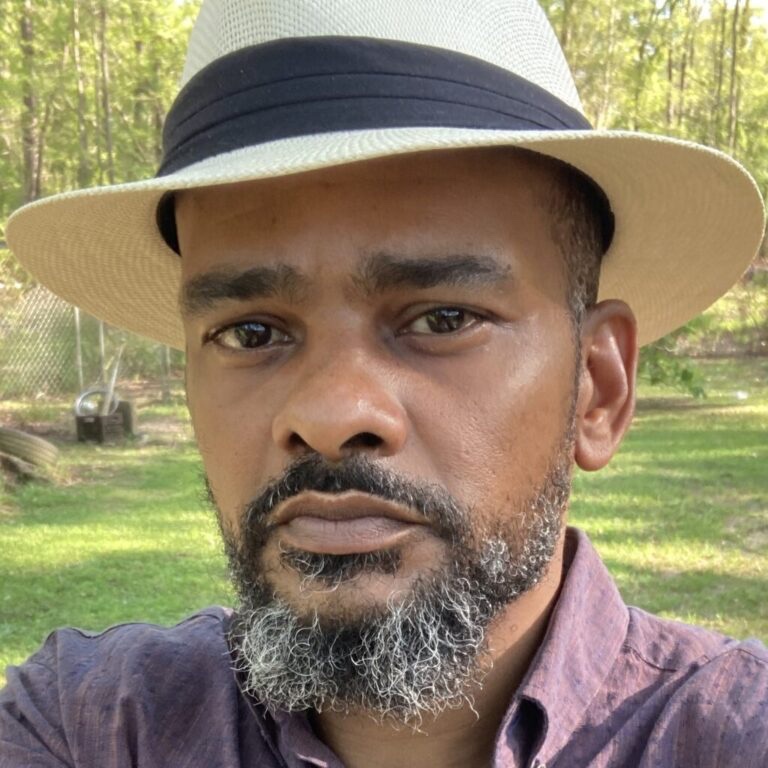
Photo credit: Mississippi Free Press
What would happen if an African-American environmental justice activist ran against a conservative white incumbent in the Deep South? This November, we will find out.
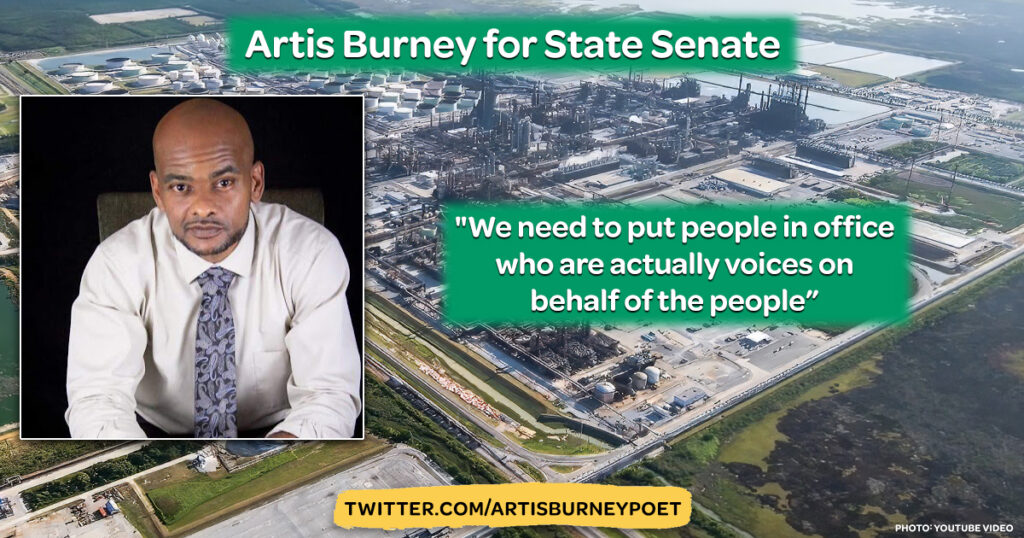
Artis Burney is the first Green Party candidate for State Senate in Mississippi. He is running in District 51 in the Gulf Coast County of Jackson, against Republican incumbent Jeremy England.
Burney’s entry into the race challenges long-term G.O.P. hegemony in the district, one so ‘red’ that in England’s first general election for a four-year term in 2019, he ran unopposed; no Democrat has even contested the district since 2007.
This year, England will again be the only major-party contender on the November ballot, appearing with Burney and Libertarian Lynn Bowker. Burney plans to challenge England from the left with a progressive social and environmental justice agenda. He spoke about his campaign to Green Pages, at the August 2023 Green Party Annual National Meeting, and on social media.
An Active Background
A native of the small unincorporated community of Vancleave (population 4,940), Burney, as he puts it, wears many hats. He is an oyster farmer. He is a part-time employee of the National Opinion Research Center, based at the University of Chicago. And a poet himself, Burney is also the director of the local nonprofit Cosmic Poetry Sanctuary, which describes itself as a “next-level social experiment about peace and love.”
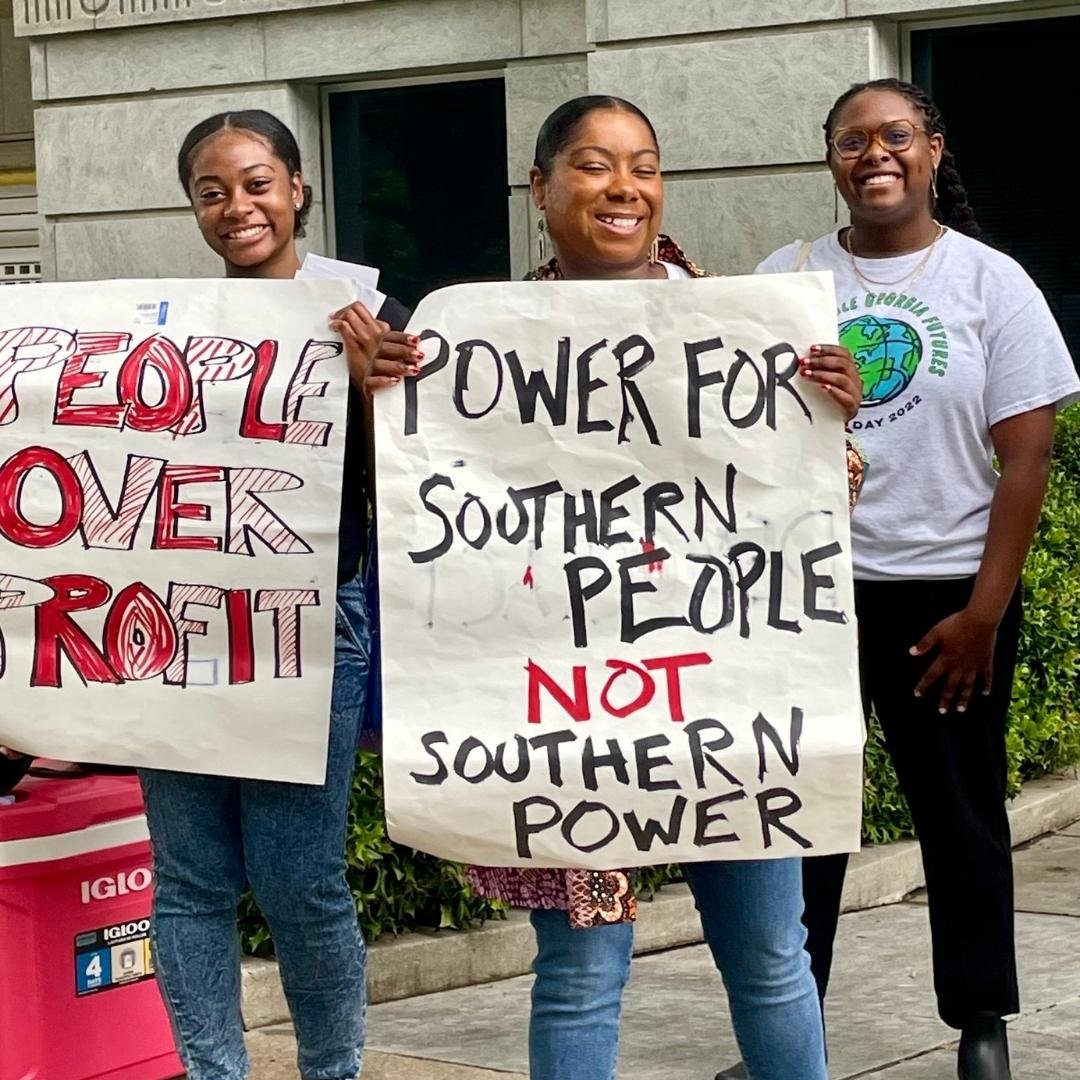
In the activist world, Burney is an organizer with Mississippi for a Green New Deal and with Arm in Arm for Climate, both regional environmental advocacy groups. Recently, Burney and Arm in Arm played a key role in challenging the Southern Company utility firm (and its subsidiary Mississippi Power) over their responsibility for unhealthy levels of lithium in local groundwater – five times higher than legally acceptable according to Burney – a problem that Arm in Arm attributes to Plant Daniel, a coal and natural gas plant operated by Mississippi Power.
Running for office as a Green
Burney’s participation in that environmental justice work — and his life experience in Jackson County overall — has shown him the importance of elected office. “Historically, my community has been very underrepresented. We usually have things happen to us in this community, instead of for us. Our communities of color are disproportionately burdened by pollution that has led to a host of health problems, including cancer, asthma, and birth defects. I decided to run because I don’t want to be that person who says somebody has to do something.” On the contrary, Burney wants to be the person who answers to others. “As a community, we have to have real conversations about what’s happening to us. This overwhelming ‘red’ majority is not serving our community. And we don’t think the answer is in a two-party system.”
This made the Green Party an attractive vehicle for a candidacy. “As I’ve become more and more of an herbalist and as I’ve found out how these big energy companies affect the environment, I’ve fallen in love more and more with the planet. The planet needs us and the Green Party is familiar enough with the public and with loving the planet, beginning with land stewardship. That’s where it all begins, in the community where we live, with the land we live on. That’s why I chose the Green Party. Because that’s me every day.”
Burney decided to carry the Green message through a campaign for State Senate because he believes the office can be influential in changing the power dynamics forced upon Jackson County citizens. “Conversations that need to be had that I haven’t heard anyone talking openly about are best facilitated through [running for] this position of Senator.”
What are Burney’s prospects? In spite of Jackson County’s deep shade of red, Democrats received an average of 31% of the vote there in the last three presidential elections, suggesting a consistent base of voters who do not vote Republican. And in 2023, there is no Democratic candidate in the race.
Confronting racial undertones
Burney seeks to give voice to those alienated by two of Senator England’s most controversial votes — for state legislation to grant Capital Police authority over nearly all of the state’s capitol city of Jackson, and to create a judiciary covering parts of Jackson with an unelected judge at the helm.
In a state where he says the Klu Klux Klan is still alive, Burney condemns these actions by the state legislature as race-based efforts to take away control of Jackson’s justice system from the local community. “This is an attempt to separate the BIPOC community from the rest of Jackson, to control certain people and how they move around. It’s definitely not what the majority of the people want.” The NAACP and the U.S. Department of Justice fall on the same side, having filed suit challenging these laws, saying the laws are “intentionally discriminatory against Black Jacksonians”, who account for over 80% of the city’s 153,000 residents, one of the Blackest cities in America.
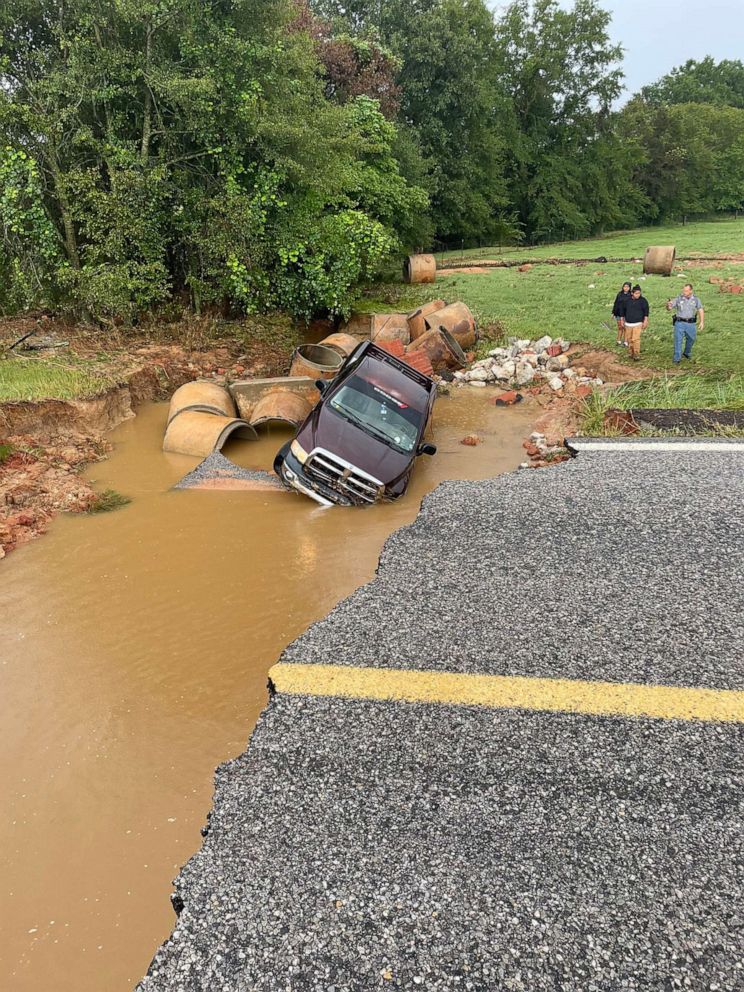
Another major strain on the city of Jackson with racial undertones that has made national news is water insecurity. As The Washington Post reported, “[the] rainfall and subsequent flooding [from a 2022 summer storm] strained the city’s primary water treatment plant; pump failures compounded the damage, leaving the city unable to provide a steady flow of safe water.” Climate change affected what the Post described as “a month of historic rainfall.”
To repair its infrastructure, Jackson has relied on state and federal dollars. The Biden Administration allocated $115 million in June 2023 to the city for upgrades. But because the state has not lived up to its own responsibility in the matter, Burney says, it is not enough. “We have this Republican super-majority, where it’s set up in the state capital, and they’re not supportive of this all-Black city.”
A month after the 2022 summer storm, the Southern Poverty Law Center filed a formal complaint against the Mississippi Department of Environmental Quality and the state government, accusing Mississippi of discriminatorily restricting infrastructure funds to the largely Black Jackson. Pointing to federal funds Mississippi has used to privilege white areas over Jackson, Burney delivers a blunt assessment of the racial bias that led to and worsened the storm’s fallout.
“This is a racial discrimination issue. It’s sad to say, but it’s part of the American way. When I go to Puerto Rico, when I go to Houston, when I go to Atlanta, south Mississippi where I live, in the Black communities, there’s always somebody there waiting to take advantage of the folks in the community.”
If elected, how would Burney act on this issue? In addition to providing more state financial support to long-neglected Jackson, “I would vote to make sure that the water – the control of the water – stays in the hands of the people as much as it can,” specifically suggesting a locally-based cooperative that manages the water system. “The people who are in charge of our water don’t live in the community. That speaks volumes about the kinds of attention that they give our water.”
Listing “water equity” among his campaign aims, Burney also connects Jackson’s struggle for clean water with the struggles for safe water outside the city limits. “We have issues with water coming in from the Gulf, poisoned water with oil and oil dispersants in it. We have issues with Southern Company polluting the water and putting lithium and carbon into it. Water should be on our minds statewide.”
Healthcare for All
Another issue on which Burney strongly disagrees with Senator England is health care. England opposes broad Medicaid expansion for Mississippi and instead voted to approve a narrow healthcare reform for Mississippi through longer postpartum coverage by Medicaid.
Burney calls for general Medicaid expansion, which The New York Times approximated would insure around 100,000 people in the state and allow “$1.35 billion in federal funds to hospitals and health care providers,” though some estimates for enrollment have been higher. The Times’ analysis came only a few months before Mississippi dismissed over 29,000 people from Medicaid in July 2023 and another 22,000 in August.
Burney slammed these expulsions and as a state senator, would go even further to provide healthcare to all. “Shame on you, Mississippi! People need healthcare. My healthcare priorities would be to make sure that every person is covered. And those people who can’t afford it, then we figure out what we have to do to get the state to pick up the bill . . . We expand Medicaid as far as we need to here in Mississippi . . . Whoever needs health insurance, whoever wants health insurance, should have health insurance.”
Green Energy
Larger environmental policy, naturally, will serve as a key component of Burney’s campaign. According to Mississippi Today, Mississippi received about 2% of its net electricity from renewable energy as of 2021. While major utility firm Entergy Mississippi has pledged one-third of its energy will come from renewable sources over the next four years, it has mostly based its decision on affordability of the conversion rather than the scale of climate change. Additionally, Mississippi does not have a renewable portfolio standard to lay out how much power renewables must provide and at which point in time.
“‘We have to end extractive economies’ Burney said in reply to the aforementioned data. “We have to completely stop the petrochemical buildout. And we have tools in place to do that. And I think that companies like Southern Company are in a position to lead the way in those areas instead of working against us . . . We don’t have any choice here in south Mississippi.”
Burney also has severe concerns with how the state’s energy industry is regulated. “We have people on the Public Service Commission and the relationships with these energy companies, they have to change. Because the PSC just pretty much works for the energy companies. It’s pretty much ‘yes’ guys.” At the same time, Burney argues, the PSC supported Mississippi Power/Southern Company raising its rates three times — in part, so that the PSC could sue the U.S. Environmental Protection Agency and pay the attorney’s fees. And all of this while, he says, “the PSC is supporting the further poisoning of Jackson County’s water and air by not pressing them to conduct business without polluting the environment.”
Burney hopes his campaign can highlight undue financial influence across the energy industry in Mississippi — and spur needed reform. “We have a Southern Company, Mississippi Power, who is just buying everything. They buy the media formats, they buy people, pretty much opinions, and they’ve managed to put five times the legal amount of lithium in our drinking water here in Jackson County. That should be a serious conversation in the community. But since they buy all the media, it goes under the radar.”
“It’s hard to communicate with people that don’t see you as real people because you don’t have the political infrastructure or the money to push back. We’re dealing with people who are arrogant enough to sue the EPA and raise the customers’ power bills in order to pay the attorney fees. My job is to speak truth to power and to connect the dots between the community and the information, so people can decide for themselves what’s best for their families. I think most folks would decide that it’s best for them not to drink poison.”
Empowering Marginalized Groups
Burney is also focused on the state’s homeless population. As of 2022, Mississippi ranked fourth worst in the nation for the percentage of unsheltered homeless individuals. “We could have temporary housing or housing for houseless people in south Mississippi if we just redirected funds and, again, brought it to the attention of the community.” Burney supports utilizing vacant buildings in Jackson County to support the realization of his goals. “We have the space to put people. We have the resources. It’s just about putting them together.”
Then there is the lack of abortion access in Mississippi. Since the U.S. Supreme Court’s ruling in Dobbs vs. Jackson Women’s Health Organization, abortion has become mostly illegal in the state, based upon Mississippi’s pre-existing trigger law. Burney would repeal the state’s anti-abortion statutes. “[Family planning] is a family decision, not a state decision. It all comes down to her, capital-H-E-R, and her body.”
Burney is also fighting for the rights of sexual and gender minorities, unlike England, who came out against gender-affirming healthcare for transgender children and voted to prevent trans students from playing on schools’ gendered sports teams that match their identity. Burney is concerned that Mississippi has no clear protections for sexual and gender minorities from discrimination in housing, public accommodations, or private health insurance — something he would work to change in the State Legislature if elected.
“Everybody should feel safe and nobody should feel bullied or intimidated or prevented from being their full, genuine selves,” Burney responds in defense of gender-affirming care. “The best way to help a child is to help a family . . . Those kinds of decisions shouldn’t be left up to other people.”
Building campaign momentum
According to Burney, his newly formed local Green group is made up of former Democrats, Republicans, and independents who were not satisfied over the past 20 years with their party affiliation – and who feel the Green Party is about putting the planet and the community first. This, he feels, has been one of the most positive aspects of his campaign. While firmly committed to building the Green Party, Burney plans to approach the Mississippi Democratic Party for their endorsement as well, in order to help gain wider exposure and consolidate support among the left-of-center voters. He is reaching across traditional left/right lines, too, “because there is no monolithic thinking among Republicans either.”
A non-partisan way Burney plans to reach voters is through religious institutions. “I hope to start conversations and have a chance to formally introduce myself by going to different churches in my district each Sunday. If we can connect the dots between being a good person according to the book and good land stewardship, then maybe we can inspire some lightbulb moments.”
Should he be elected, Mississippi Greens hope Burney will be joined in the state legislature by fellow Green Gregory Todd “Ttodd” Fortenberry, who is running for the State House of Representatives in District 99. Both have been endorsed by the Green Party of Mississippi. But win or lose in November, Burney sees long-term value in his ground-breaking campaign. He hopes that “this conversation we facilitated gets so much attention that it will carry over into holding whoever becomes senator accountable for getting better work done.”

Member, New Augusta City Council
pictured third from left
Burney also anticipates that his State Senate run this year will inspire more Mississippi Greens to run for office. Presently they have one party member holding elected office, urban planner and political scientist John Proctor on the New Augusta City Council, about 115 miles northwest of Vancleave in Perry County. Including 2023, Mississippi Greens have run for office 13 times since 2004.
And having entered the electoral arena now himself, what advice would Burney give to other Green candidates, about how to do politics differently while still working in the system? “Listen to your BIPOC friends, they have some good advice. Also listen to your LGBTQ community, and your trans friends, because they can remind you you can be whoever you want to be and learn how to love expansively. Change the game. Flip the table.”
_________________________________________________________
Author of this article Jack Lucas (he/him/his) is a registered member of the Green Party of California and formerly affiliated with the Green-Rainbow Party of Massachusetts.


Correction: The Southern Poverty Law Center filed its complaint in May 2023, not in 2022.